

So, you’ve put together a fantastic ad campaign for Facebook or Google. You’ve nailed the copy, the visuals are stunning, and you’re ready to watch the leads and sales roll in. But there’s a crucial piece of the puzzle that often gets overlooked: the landing page. Sending all that valuable traffic to a page that isn’t optimized for conversions is like inviting guests to a party but forgetting to tell them where it is.
Together, we’re going to change that. A well-designed landing page is your secret weapon for turning curious clicks into committed customers. It’s the handshake, the friendly welcome, and the clear guide that shows visitors exactly what to do next.
In this guide, we’ll walk through how to build a high-converting landing page from the ground up. We’ll explore the essential elements every page needs, how to write copy that connects, and the design principles that guide users toward your call to action. Let’s build something great together.
The Foundation: Core Elements of a High-Converting Landing Page
Think of your landing page as a focused conversation with a potential customer. To keep the conversation flowing smoothly toward a conversion, you need a few key elements working in harmony. Let’s break down what they are and why they matter.
The Hero Section: Your First Impression
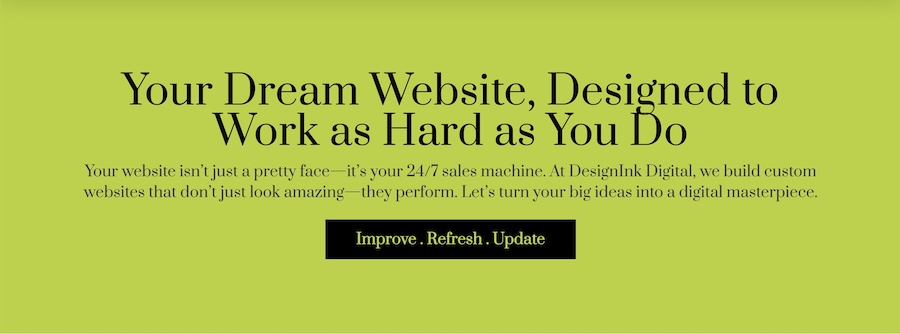
The moment someone clicks your ad, they land on your page and make a split-second decision: stay or go. The “hero section”—the top part of the page visible without scrolling—is your one chance to make a winning first impression.
- Compelling Headline: Your headline must immediately connect with the promise made in your ad. It should be clear, concise, and benefit-driven. If your ad promises “50% Off Custom T-Shirts,” your headline should echo that offer, not something vague like “Welcome to Our Store.”
- Supportive Subheading: Use the subheading to add a little more detail. It can elaborate on the main benefit or explain who the offer is for. For example, if the headline is “Effortless Meal Planning,” the subheading could be “Get healthy, pre-planned dinner recipes delivered to your inbox every week.”
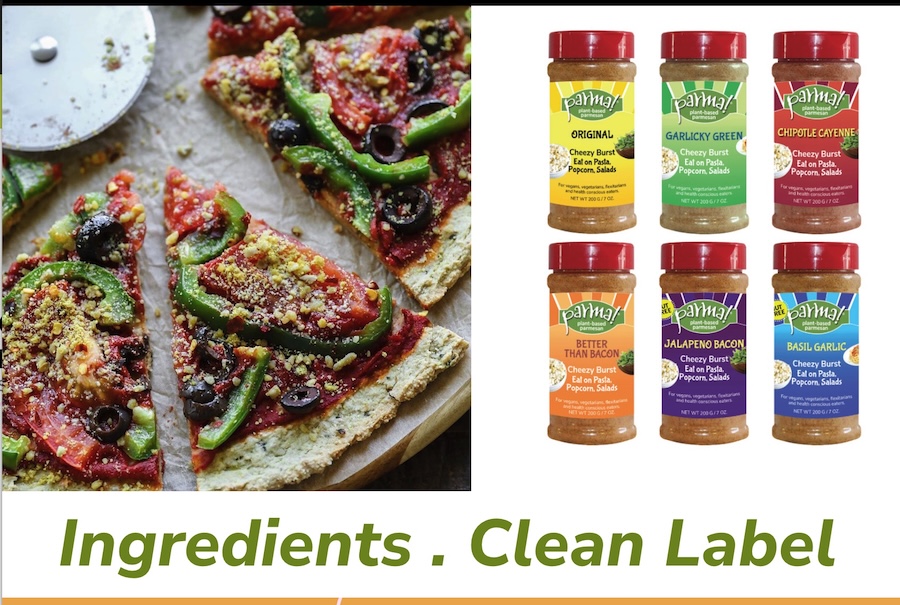
- Engaging Visuals: A picture really is worth a thousand words. Use high-quality images or a short video that shows your product or service in action. The visuals should be relevant and help visitors imagine themselves benefiting from your offer.
- Obvious Call to Action (CTA): Your main CTA button should be impossible to miss. Use a contrasting color that makes it pop and action-oriented text like “Get My Free Guide” or “Start My Trial” instead of a passive “Submit.”
Social Proof: Building Trust and Credibility
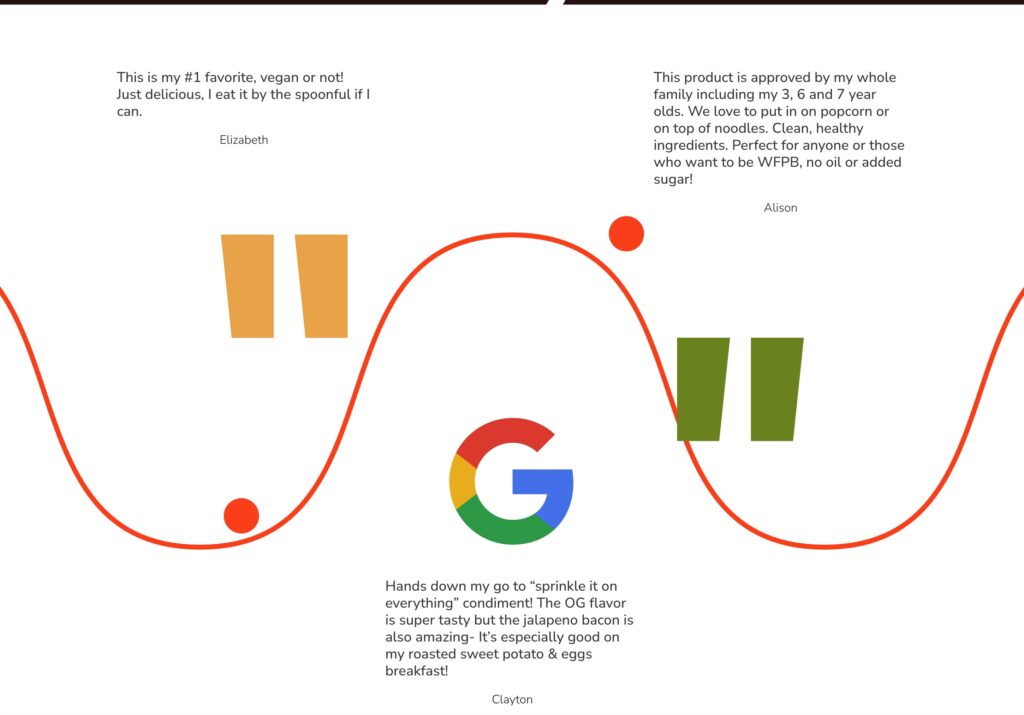
People trust people. Before committing to a purchase or signing up, visitors want to know that others have had a positive experience with you. Integrating social proof is one of the most powerful ways to build that trust.
- Testimonials and Reviews: Feature quotes from happy customers. Include their name and maybe a photo to make the testimonial feel more authentic. Pulling direct quotes from Google Reviews, Yelp, or Facebook can be very effective.
- Logos of Past Clients: If you’re a B2B company, displaying the logos of well-known companies you’ve worked with adds instant credibility. It shows that established businesses trust your work.
- Case Studies: For more complex services, a summary of a successful project (a mini-case study) can be incredibly persuasive. Highlight the problem, your solution, and the amazing results you achieved for a client.
- Trust Badges and Security Seals: If you’re asking for payment or sensitive information, display security badges (like SSL certificates) and symbols of trust (like a money-back guarantee). This reassures visitors that their data is safe.
The Offer: Clearly Stating the Value
Your visitors need to understand exactly what they’re getting and why it’s valuable. Don’t make them guess.
- Benefit-Oriented Bullet Points: Instead of listing features, focus on the benefits. A feature of a vacuum cleaner is “a powerful 12-amp motor.” The benefit is “effortlessly picks up pet hair in a single pass.” See the difference? Benefits solve a problem for the customer. Use bullet points to make these benefits easy to scan and digest.
- A Single, Focused Goal: This is a golden rule of landing pages. Every landing page should have one goal—one thing you want the visitor to do. Don’t distract them with navigation links to your blog, social media, or other pages. The goal might be to download an ebook, sign up for a webinar, or buy a product. Whatever it is, the entire page should be dedicated to that single action.
When we work with our partners, we focus on crafting landing pages that convert by ensuring these foundational elements are perfectly aligned with their campaign goals.
Copywriting That Connects and Converts
You can have the most beautiful landing page in the world, but if the words don’t resonate with your audience, it won’t perform. Great landing page copy is clear, persuasive, and speaks directly to the needs and desires of your visitor.
Know Your Audience Inside and Out
Before you write a single word, you need to understand who you’re talking to. What are their biggest challenges? What are they trying to achieve? What words and phrases do they use? When you understand their “pain points,” you can frame your offer as the perfect solution.
Imagine you’re selling a project management tool for small teams. Your audience isn’t just looking for “software”; they’re looking for less stress, fewer missed deadlines, and a better way to collaborate. Your copy should speak to those emotional drivers.
Write Like a Human
Forget stuffy corporate jargon. Write in a natural, conversational tone. Use “you” and “your” to speak directly to the reader. Use “we” and “our” to build a sense of partnership. Read your copy out loud. Does it sound like something a real person would say? If it sounds robotic or overly formal, it’s time for a rewrite.
Keep your sentences and paragraphs short. Big blocks of text are intimidating and often get skipped. Use headings, subheadings, and bullet points to break up the text and make it easy for visitors to scan for the most important information.
Focus on Benefits, Not Just Features
We touched on this earlier, but it’s so important it deserves its own section. Customers don’t buy products; they buy better versions of themselves. They buy solutions to their problems.
Here’s a simple framework to turn a feature into a benefit:
- Feature: What your product is or does (e.g., “This camera has a 24MP sensor.”)
- Advantage: What the feature does (e.g., “It captures high-resolution images.”)
- Benefit: What that means for the customer (e.g., “You can print stunning, wall-sized photos of your family that look crisp and professional.”)
Your copy should be packed with benefits. Explain how your offer will make your customer’s life easier, better, or more enjoyable.
Design for a Seamless User Experience
Great design isn’t just about making things look pretty; it’s about guiding the user’s eye and making it incredibly easy for them to take action. For landing pages, a clean, intuitive, and mobile-friendly design is non-negotiable.
Visual Hierarchy and Flow
Visual hierarchy is the art of arranging elements to show their order of importance. Your most important element—the headline or the CTA—should be the most prominent. You can use size, color, and placement to direct your visitor’s attention.
- Guide the Eye: People in Western cultures tend to read in a “Z” or “F” pattern. Place your most important information along those natural eye paths. Your headline should be at the top, followed by supporting copy, and your CTA should be easy to spot.
- Use Whitespace: Don’t cram your page full of text and images. Whitespace (or negative space) is the empty area around elements. It reduces clutter, improves readability, and helps important elements like your CTA stand out.
Mobile-First Design Is a Must
A significant portion of your traffic from Facebook and Google Ads will come from mobile devices. If your landing page is difficult to use on a smartphone, you’re losing conversions.
- Responsive Design: Your page must automatically adapt to fit any screen size, from a large desktop monitor to a small phone screen. Text should be readable without pinching and zooming, and buttons should be large enough to be easily tapped with a thumb.
- Fast Load Times: Mobile users are impatient. A page that takes too long to load will be abandoned. Optimize your images, streamline your code, and do whatever it takes to ensure your page loads in three seconds or less.
The Power of Color and Contrast
Color psychology is real. Colors can evoke emotions and draw attention. Use a color palette that aligns with your brand, but make sure your CTA button is a color that contrasts sharply with the background. A bright orange or green button on a white or grey background is a classic choice because it instantly draws the eye.
By bringing together these foundational elements, compelling copy, and user-centric design, we can create a powerful landing page experience. It’s a collaborative process of understanding your goals and your audience to build a page that not only looks great but also delivers results.
Your Landing Page
Creating a landing page that converts is a blend of art and science. It requires a deep understanding of your audience, a clear and compelling message, and a design that makes taking action feel effortless. By focusing on a strong hero section, building trust with social proof, and keeping your page’s goal singular and focused, you create a path for success.
Remember to write copy that speaks directly to your customer’s needs and design a seamless experience, especially for mobile users. Each element, from the headline to the color of your CTA button, plays a part in the collaborative effort to turn a click into a customer.
Now you have the framework. It’s time to put these principles into practice and watch your conversion rates climb.
Frequently Asked Questions
How many landing pages do I need for my ad campaigns?
It’s best practice to have a dedicated landing page for each distinct ad campaign or audience segment. If you’re running one ad for a free trial and another for a downloadable guide, they should lead to two separate landing pages, each tailored specifically to that offer. This ensures message match and improves conversion rates.
Should I include a navigation menu on my landing page?
Generally, no. A landing page should have a single goal, and a navigation menu provides an easy exit route for visitors, distracting them from the desired action. By removing navigation, you keep them focused on the offer. The only exception might be links to your privacy policy or terms of service in the footer.
At DesignInk, LLC, we’re passionate about partnering with small and mid-sized businesses to craft custom digital marketing solutions that help you grow and shine. Together, we’ll pave the way for success with creative strategies, reliable execution, and a spirit of collaboration every step of the way. Ready to make your mark?